
ATS optimization is the strategic process you need to focus on when formatting and writing your resume. It ensures that your resume is accurately read, parsed, and highly ranked by an Applicant Tracking System (ATS).
Failing to optimize for the ATS may result in rejecting your application, no matter how qualified you are.
With statistics showing that 75% of resumes are rejected by ATS before human review, mastering this skill is essential for any modern job seeker.
What is ATS?
ATS is a software used by the vast majority of companies to manage job applications. ATS helps employees to automatically filter the received resumes based on their criteria. It means that before your resume can be seen and judged by a human recruiter, it must first pass this digital gatekeeper. That’s why paying attention to ATS optimization is a must when creating your resume.
How Applicant Tracking Systems Actually Work?
When you submit your application, the ATS goes through three key stages:
1. Resume Parsing:
At t the first stage, ATS uses Parsing technology to convert your resume document into a machine-readable, standardized text format. It extracts important data like:
· Your name,
· Contact details,
· Work history,
· Skills,
· And education.
Then all data is sorted into predefined database fields.
If your resume has not designed in a standard format, the ATS may miss or scramble critical information.
2. Keyword Scoring & Matching:
The next step is comparing the parsed content against the job description. The ATS system uses algorithms to look for:
· Specific keyword matching,
· Required hard skills,
· Certifications,
· Software proficiencies,
· And industry terminology.
The resume is assigned a score based on the relevance and frequency of these matches.
3. Ranking & Storage:
The final step is ranking the resumes based on their score. The system then forwards the top-ranking applications (often those with a match rate of 70% or higher) to a recruiter for review.
All applications, regardless of ATS optimization, are stored in a searchable database, where recruiters can later find candidates by running searches with specific skill-based keywords.
Why Good Resumes Fail ATS Screening?
Statistics reveal that 85% of candidates are filtered out by the ATS system, while they have relevant experiences and skills. Research shows that the problem is about technical and content issues that disrupt the ATS process. The most common reasons for ATS rejection include:
· Complex Formatting: Tables, text boxes, multiple columns, graphics, or elaborate templates in the resume confuse the parsing technology of ATS, leading to garbled or lost information.
· Improper File Type: The acceptable formats of resumes are PDFs or .docx files. Using an incompatible file type can cause parsing failures.
· Misplaced Information: ATS usually misses the critical details like your name and contact information in the header or footer.
· Missing Keywords: If you haven’t paid attention to ATS optimization for language and specific keywords of the job description, your resume will have a low match score, regardless of your actual qualifications.
· Over-Design: Creative fonts, icons, charts, and colors may appeal to humans, but they are not readable to an ATS resulted in errors or corrupt data.
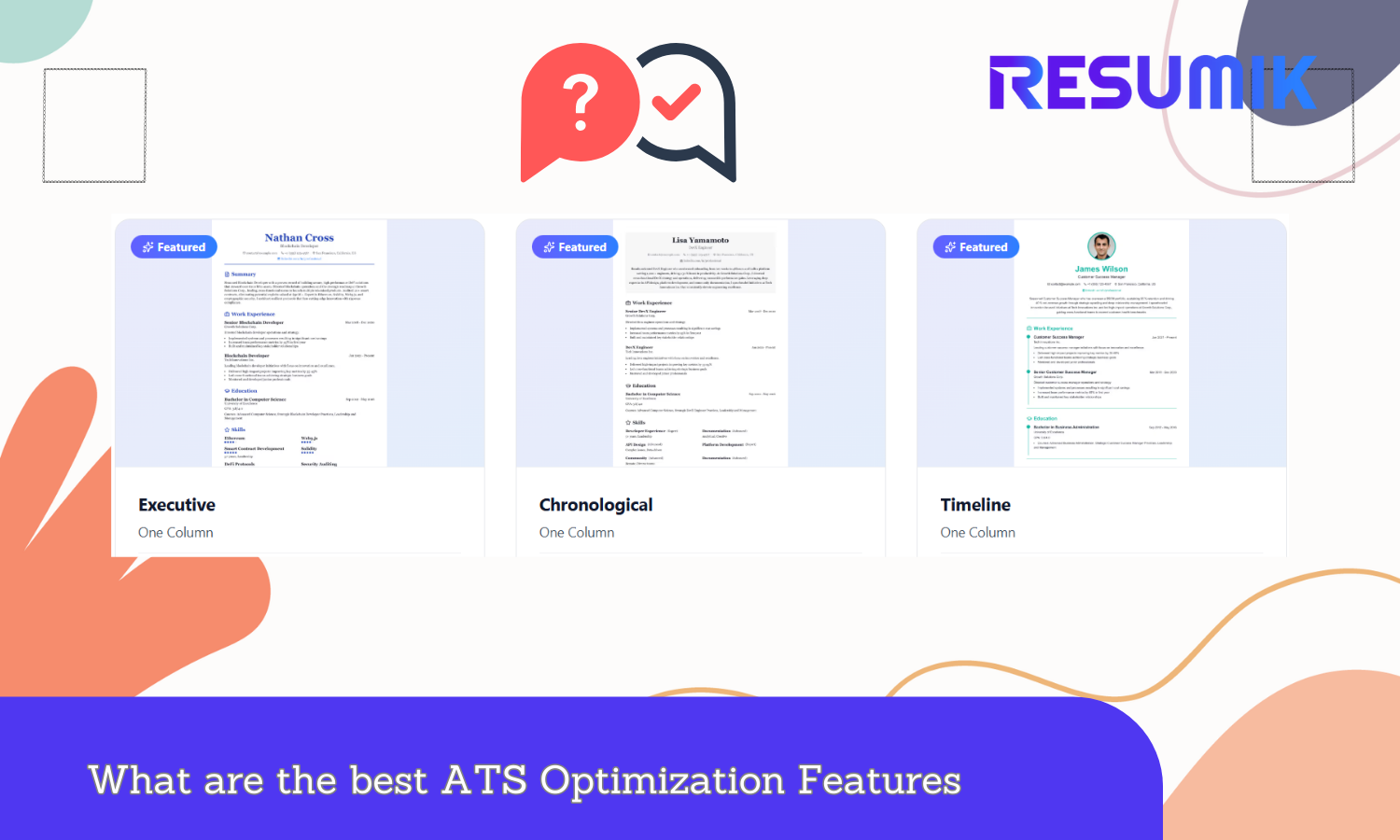
What are the best ATS Optimization Features?
ATS optimization requires adherence to a specific set of technical, structural, and content rules. The features your resume must have to navigate the initial automated screening successfully include simplicity, clarity, and strategic keyword use.
Let’s review the most critical features, ensuring every part of your professional story is accessible to the software.
Structural Features for ATS Optimization
A clear, hierarchical ATS resume structure has the following features:
· Simple, Standard Headings: Divide your resume into conventional, easily recognizable sections with clear titles like "Work Experience," "Education," "Skills," and "Certifications." Avoid using creative labels like "My Journey" or "Where I've Excelled," which the ATS may not categorize correctly.
· Reverse-Chronological Order: This is the gold standard for the work experience section. It is the format that the ATS parsing algorithm is most reliably trained to interpret, as it presents a clear, linear career progression.
· Clean, Single-Column Layout: Choose a simple, one-column resume template. Multi-column or grid-based layouts (common in visually appealing templates) often scramble the reading order for an ATS, causing sections to be parsed incorrectly.
· Logical Resume Sections: Organizing information into distinct, separated blocks is essential for ATS optimization. Each section in your resume should contain one type of information (e.g., job titles and dates in "Experience," degree names and institutions in "Education").
Content Features That Improve ATS Scores
ATS reviews the content of your resume to determine its ranking. Using strategic resume keywords and quantifiable achievements are the core of effective ATS optimization techniques.
· Hard Skills & Keywords: Add the exact hard skills, tools, and certifications listed as requirements in the job description to your resume. This is the most critical factor for ATS optimization and gettinga high score.
· Role-Specific Terminology: Look for industry-standard and company-specific language in the job description and use them in your resume. For example, if "Revenue Growth" is mentioned in the JD, add that exact phrase in your resume rather than "Sales Increase."
· Measurable Achievements: Use Incorporate metrics, percentages, and dollar amounts to quantify your impact (e.g., "Increased efficiency by 15%," "Managed a $500K budget"). This provides context for your skills and is valued by both ATS algorithms and human readers.
· Keyword Variation: For common acronyms, list both the full term and the abbreviation (e.g., "Search Engine Optimization (SEO)") to ensure you match different search behaviors.
Technical Features That Affect Parsing
You can’t ignore software limitations in ATS optimization. Your resume must be built with the following technical requirements in mind:
· File Type (.docx vs. PDF): Microsoft Word document (.docx or .doc) is the most universally compatible format for the ATS parsing algorithm. Only use a PDF if the job posting explicitly states it is acceptable.
· Fonts: Standard, web-safe fonts like Arial, Calibri, Georgia, or Times New Roman ensure the ATS can read all of your information with no conflict. Avoid decorative or script fonts that may not render correctly or could be converted to special characters by the ATS.
· Bullet Points: Using simple, solid round or square bullets is common and can be interpreted correctly by ATS.
· Spacing & Alignment: To avoid parsing errors, use standard paragraph spacing and left-aligned text. Creating complex visual by multiple spaces or tabs is not recommended for ATS optimization.
Key Comparison: ATS-Optimized vs. Non-Optimized Resume
|
Feature |
ATS-Optimized Resume |
Non-Optimized Resume |
|
Keyword Matching |
High. Uses exact keywords and phrases from the job description strategically throughout. |
Low. May use synonyms or different terminology, missing critical matches. |
|
Parsing Accuracy |
Excellent. A simple format allows the ATS to correctly extract all contact, experience, and skill data. |
Poor. Complex layouts, tables, or graphics cause information to be missed or scrambled. |
|
ATS Ranking |
Strong. Achieves a high match score, placing it in the top tier for recruiter review. |
Weak. Receives a low score, often falling below the threshold for human review. |
|
Human Readability |
Balanced. Clean, professional, and easy to scan quickly for key achievements. |
Inconsistent. Can be either too plain and unengaging or overly designed and distracting. |
|
Interview Chances |
Higher. Successfully passes the digital gatekeeper and presents well to the recruiter. |
Lower. Often filtered out automatically before a human ever sees it. |
Common ATS Optimization Myths
There are several myths that job seekers believe can help them succeed their ATS optimization efforts.
#1 Keyword Stuffing is Effective
Early ATS systems couldn’t recognize repeating keywords dozens of times. However, the new versions, especially with AI assist, analyze context and can recognize obvious stuffing, poor readability, and a lack of substance.
#2 Using "Invisible" White Text Keywords Works
Hiding keywords by making them white-on-white is not a good trick anymore. ATS algorithms can easily detect the,m leading to immediate rejection.
#3 You Must Sacrifice All Design
ATS optimization does not mean sending plain text. You can use resume templates with elements like bold for section headers, italics for job titles, or a tasteful splash of color for different sections.
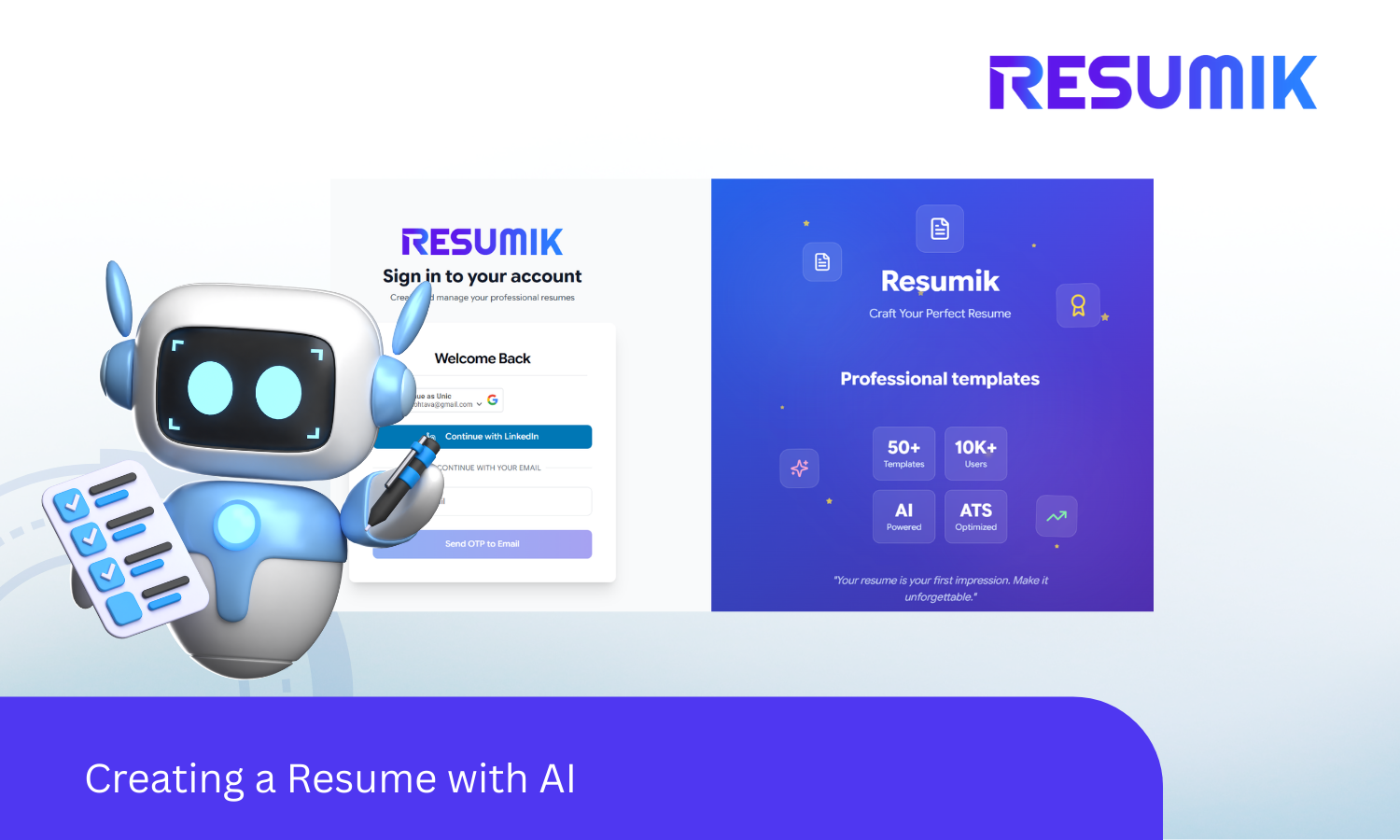
Creating a Resume with AI – How Effective Is It for ATS?
AI resume builders are designed to automate ATS optimization, but their effectiveness for passing the parsing technology and getting a high score requires human correction.
AI tools are now a powerful assistant for creating a resume with an acceptable technical format and keyword suggestions. However, it doesn’t make sense to rely solely on AI to produce a perfect resume. You need to add personal nuance and specific achievements to stand out in a competitive pool.
How AI Resume Tools can help with ATS optimization
Most AI resume builders are designed to address common ATS pitfalls, offering features like keyword matching and standard formatting.
AI can help you to ensure:
· Automated Keyword Insertion: You can get help from AI tools to analyze a job description and suggest relevant skills and keywords to add to your resume, helping to boost the technical match score.
· Pre-Formatted Templates: AI tools can offer ATS-optimized templates containing simple structures, standard headings, and compatible fonts.
· Job Description Matching: Advanced Resume Builders provide a "match rate" or score, comparing your resume content to the job description and highlighting gaps in keywords or skills.
ATS Resume Checkers – How Accurate Are They?
ATS resume checker tools have become popular among job seekers who want to test their resumes before submission. These ATS optimization checker platforms simulate the parsing and scoring process; however, their accuracy and utility differ.
They are excellent for identifying common formatting errors and major keyword gaps, but they cannot perfectly replicate every aspect of the ATS algorithm used by employers.
FAQ About ATS Optimization
Q1: What features must a resume have to pass ATS?
For ATS optimization, you must consider: a single-column layout with standard section headings (e.g., "Work Experience"); a .docx file format (unless PDF is specified); no tables, graphics, or text boxes. It is recommended to place contact info and your name in the main body, not the header/footer, and use keywords from the job description in the skills and experience sections.
Q2: Are AI-generated resumes good for ATS optimization?
AI resume builders are helpful for initial formatting and keyword suggestions. However, they often produce generic content. To ensure your resume can pass the ATS algorithms, use AI as a draft assistant, and customize the result to add specific achievements and an authentic voice.
Q3: Can ATS optimization reduce readability?
No, when done correctly. Effective ATS optimization uses a clean, simple format that is actually more readable for time-pressed recruiters.
Q4: Are free ATS resume checkers reliable?
Free ATS resume scan tools are valuable for identifying basic formatting errors and obvious keyword gaps. For a more accurate result, especially for a specific dream job, you need to use a tool that allows you to compare your resume directly against the job description.
Q5: Is advice from ATS optimization Reddit accurate?
ATS optimization Reddit communities can offer useful tips and shared experiences. However, the advice can be mixed in quality and may be outdated. Always cross-reference popular advice with authoritative career websites and recent data.